
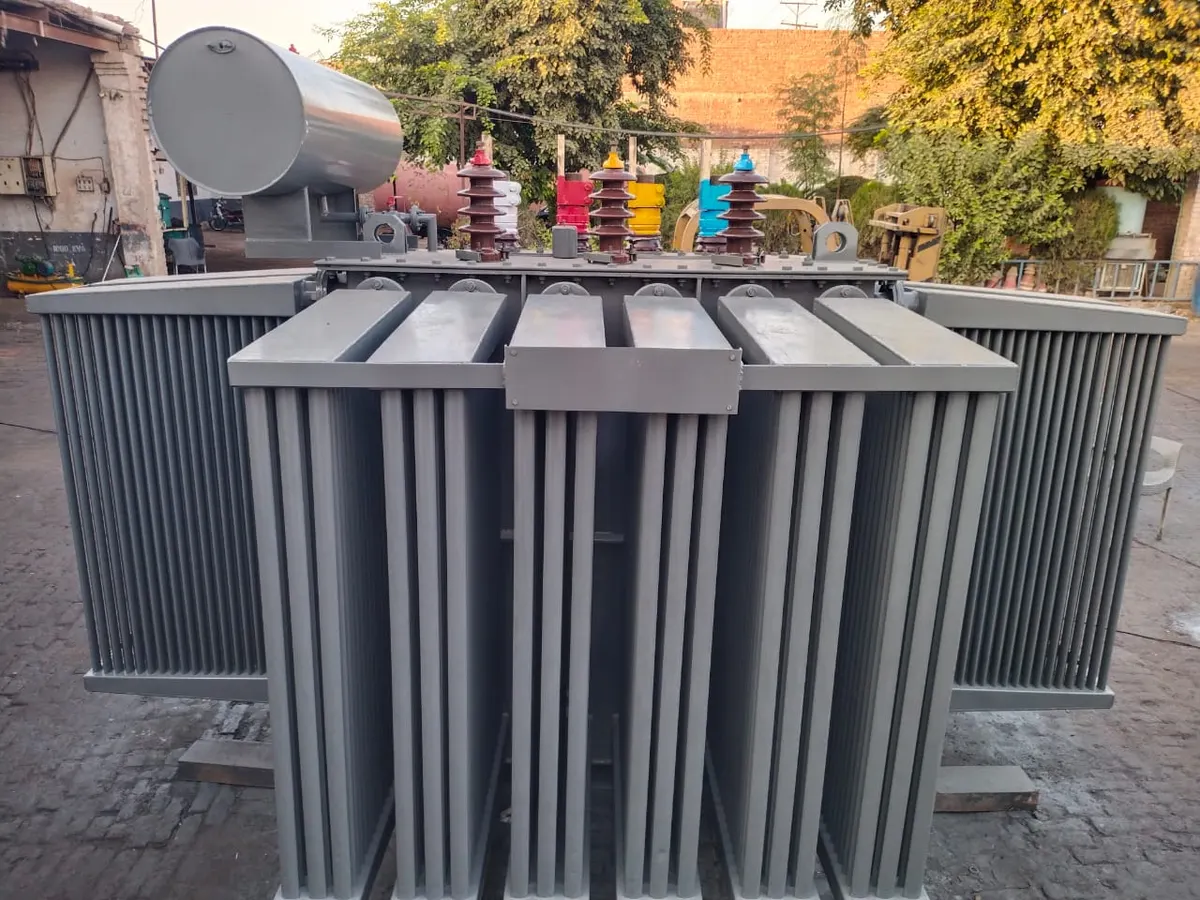
What to Know Before Buying
Before you contact a single dealer or request a single quotation, you need clarity on five fundamental questions. Answering these upfront saves you from buying the wrong transformer — and from the costly process of replacing it later.
1. Determine Your KVA Requirement
The KVA (kilovolt-ampere) rating is the single most important specification. It defines how much electrical load the transformer can handle continuously without overheating. Undersize it and you risk overloading, overheating, and premature failure. Oversize it excessively and you waste capital on capacity you never use.
Calculating the right KVA rating requires adding up all connected loads — motors, lighting, HVAC, machinery — applying diversity factors, and building in a reasonable margin for future expansion. If you are unsure how to do this, our transformer sizing guide walks you through the process step by step. Alternatively, you can share your load schedule with our engineering team and we will calculate the optimal KVA rating for you.
2. Voltage Class
Transformers in Pakistan typically operate at 11 kV or 33 kV on the primary (high-voltage) side, stepping down to 400 V or 415 V on the secondary (low-voltage) side. Your voltage class depends on what the local distribution company (LESCO, FESCO, IESCO, K-Electric, etc.) provides at your connection point. Confirm this with your utility before ordering — installing an 11 kV transformer on a 33 kV supply is a dangerous and expensive mistake.
3. Indoor vs Outdoor Installation
Where will the transformer be installed? Outdoor pad-mounted transformers are the most common in Pakistan's industrial sector — they sit on a concrete plinth in the open air and use natural or forced air cooling via radiators. Indoor transformers are required when space is limited or when the transformer must be housed inside a building, such as in commercial plazas, hospitals, or data centres. Indoor installations have stricter ventilation and fire safety requirements.
4. Oil-Immersed vs Dry-Type
The vast majority of power and distribution transformers in Pakistan are oil-immersed — the windings are submerged in insulating oil that provides both electrical insulation and cooling. Oil-immersed transformers are robust, efficient, and well-suited to Pakistan's climate.
Dry-type transformers use air or resin for insulation instead of oil. They are preferred in locations where fire risk must be minimised — hospitals, shopping centres, underground installations, or anywhere oil leakage would be unacceptable. Dry-type units are typically more expensive and available in smaller KVA ratings.
5. New vs Used
Should you buy a brand-new transformer or a certified used or refurbished unit? Both are viable options — the right choice depends on your budget, timeline, and how long you plan to operate at your current capacity. We cover this decision in detail in our new vs used transformer comparison, and we summarise the key points in this guide as well.
Choosing a Transformer Dealer
Pakistan has hundreds of transformer dealers — from large, established companies with decades of experience to small workshops selling units with no documentation or accountability. The dealer you choose determines the quality of the transformer you receive, the accuracy of the test reports, the reliability of the warranty, and whether you will have support when something goes wrong five years down the road.
What Makes a Reputable Dealer
- Years in business — a dealer who has been operating for 10, 15, or 18+ years has survived because they deliver quality. Longevity in this industry is earned, not given
- Test reports for every unit — a serious dealer tests every transformer before sale and provides documented results. This includes routine tests such as turns ratio, insulation resistance, oil BDV (breakdown voltage), and load testing
- Written warranty — the dealer should provide a clear, written warranty certificate specifying what is covered, for how long, and what the claims process looks like
- After-sales service capability — does the dealer have an engineering team that can respond when you need maintenance, repair, or troubleshooting? A dealer who disappears after the sale is not a partner — they are a liability
- Stock availability — a well-stocked dealer can show you the transformer, let you inspect it, and deliver quickly. If a dealer always has to "arrange" the unit from somewhere else, you lose visibility into its history and condition
- Range of brands and sizes — a reputable dealer carries multiple brands and KVA ratings. This means they can recommend the best fit for your needs rather than pushing whatever single brand they happen to carry
- Transparent communication — the dealer should answer your technical questions directly, explain the condition of used units honestly, and provide clear timelines for delivery and installation
Red Flags to Watch For
- No test reports — if a dealer cannot or will not provide a test report for a used transformer, there is no way to verify its condition. Walk away
- No warranty — a dealer who sells transformers without any warranty has no confidence in their own product. Why should you?
- Pressure selling — "this is the last unit," "another buyer is coming tomorrow," "the price goes up next week." Legitimate dealers do not use pressure tactics. Transformers are capital equipment — take the time you need to make the right decision
- Vague history — if the dealer cannot tell you where a used transformer was previously installed, why it was removed, or what testing was done, the unit's condition is unknown and the risk is yours
- No physical premises — a dealer operating only through phone calls and social media with no warehouse, no workshop, and no visible inventory is a significant risk
New vs Used vs Refurbished
Understanding the differences between these three categories is essential to making a smart purchase. We cover this topic in depth in our dedicated new vs used transformer guide, but here is a summary of the key points.
New Transformers
Manufactured to your specifications, a new transformer arrives unused with full manufacturer documentation, factory test reports, and the longest available warranty. New units offer maximum lifespan (25–30+ years), the latest efficiency standards, and zero risk of hidden prior damage. The trade-off is a longer lead time (4–12 weeks for manufacturing) and higher upfront capital.
Buy new when you need a non-standard specification, when compliance or utility requirements demand it, when you are building a permanent facility for 20+ years, or when your project timeline allows the manufacturing lead time.
Used Transformers
A used transformer has been previously installed and operated. Its condition varies widely depending on how it was maintained, why it was removed, and how thoroughly it has been inspected since decommissioning. The key advantage is immediate availability and lower upfront investment.
The risk with used transformers depends entirely on the dealer. A reputable dealer like TransfoLine inspects, tests, and certifies every used unit before sale. An unverified used transformer from an unknown source is a gamble.
Refurbished Transformers
A refurbished transformer has been professionally disassembled, inspected, repaired where needed (new gaskets, fresh oil, rewound coils if required), fully tested, and certified for service. A properly refurbished unit performs like new but at a significantly lower investment. Refurbished transformers from a trusted dealer can last 10–20+ years with proper maintenance.
When Each Option Makes Sense
| Scenario | Best Option | Why |
|---|---|---|
| New factory, permanent load, custom specs | New | Maximum lifespan, exact specifications |
| Urgent replacement after failure | Used / Refurbished | Immediate availability, ships in 2–5 days |
| Temporary expansion or seasonal load | Used | Lower capital commitment for short-term need |
| Budget-conscious with standard KVA need | Refurbished | Like-new performance at lower investment |
| Backup / standby unit | Used / Refurbished | Most economical way to have a ready spare |
| Utility or compliance requirement for new | New | Regulatory mandate, full factory documentation |
Key Specifications to Verify
Whether you are buying new or used, these are the specifications you must verify before completing your purchase. Do not rely on verbal assurances — check the nameplate and test report yourself.
KVA Rating
The transformer's continuous power handling capacity. Confirm that the KVA rating on the nameplate matches your calculated requirement. Common ratings in Pakistan include 100, 200, 250, 315, 400, 500, 630, 750, 1000, 1250, 1500, 2000, 2500, 3000, 5000, and 8000 KVA. If you are unsure about your requirement, use our sizing guide or contact our engineers.
Voltage Ratio
The primary-to-secondary voltage transformation. In Pakistan, the most common ratios are 11000/415 V and 33000/415 V. Verify that the transformer's voltage ratio matches your utility supply voltage and your facility's distribution voltage. An incorrect voltage ratio renders the transformer unusable on your supply.
Impedance Percentage
Impedance (typically expressed as a percentage, such as 4.5% or 5.75%) affects the transformer's fault current contribution, voltage regulation, and parallel operation capability. Higher impedance limits fault current but increases voltage drop under load. If you plan to operate transformers in parallel, their impedance values must match closely.
Vector Group (Dyn11)
The vector group defines the winding connection configuration and the phase displacement between primary and secondary voltages. Dyn11 (delta primary, star secondary, 30-degree displacement) is the standard vector group for distribution transformers in Pakistan. If you are connecting to an existing system or running transformers in parallel, the vector groups must match exactly.
Cooling Type
The cooling designation tells you how the transformer dissipates heat. ONAN (Oil Natural Air Natural) is the most common — oil circulates naturally, and heat radiates from the tank and radiators into the surrounding air. ONAF (Oil Natural Air Forced) adds fans for higher-capacity or confined installations. Verify the cooling type matches your installation environment.
Tap Changer Range
Most distribution transformers in Pakistan come with an off-load tap changer (OLTC) that allows voltage adjustment in steps — typically +5% to -5% in 2.5% steps, giving you five tap positions. This compensates for supply voltage variations. Verify the tap changer range and confirm it covers the voltage variation at your site. For large industrial installations, an on-load tap changer (which adjusts voltage without disconnecting the load) may be required.
Manufacturer and Year
For used transformers, the manufacturer and year of manufacture tell you about the original build quality and the unit's age. Transformers from established manufacturers (Pakistan, European, or Japanese brands) with a track record of reliability are preferable. The year of manufacture, combined with the maintenance history, gives you a realistic estimate of remaining service life.
Nameplate Data
The nameplate is the transformer's identity document. It should clearly show the manufacturer name, serial number, year of manufacture, KVA rating, voltage ratio, impedance percentage, vector group, cooling type, weight (total and oil), and applicable standards. A missing, damaged, or illegible nameplate is a red flag — it makes verification impossible and may indicate the unit has been tampered with or its history concealed.
Documentation You Should Receive
A transformer is not a commodity you buy off a shelf — it is a tested, certified piece of electrical equipment. The documentation you receive with your purchase is just as important as the hardware itself. It proves the transformer has been tested, tells you how to operate and maintain it, and provides the basis for any warranty claims.
1. Test Report (Routine Tests)
The test report is the most important document. For a new transformer, this is the factory test report. For a used or refurbished transformer, this is the dealer's test report confirming the unit's current condition. The routine tests should include:
- Turns ratio test — verifies the voltage ratio is correct across all tap positions
- Insulation resistance (IR) test — measures the insulation quality between windings and between windings and earth. Low IR values indicate moisture ingress or insulation degradation
- Oil breakdown voltage (BDV) test — confirms the transformer oil meets minimum dielectric strength standards. Low BDV indicates moisture or contamination in the oil
- Load test — verifies the transformer can handle its rated load without abnormal temperature rise or voltage drop
- No-load loss and load loss measurement — quantifies the transformer's energy losses, which directly affect operating efficiency
If a dealer provides a test report, verify that it includes specific measured values — not just "pass" or "satisfactory." Numbers tell you the actual condition; vague words tell you nothing.
2. Warranty Certificate
The warranty certificate should state in writing what is covered (manufacturing defects, refurbishment defects, component failures), the warranty duration, the claims process, and any exclusions (misuse, overloading, external damage). Keep this document safe — you will need it if any issue arises during the warranty period.
3. Nameplate Data Sheet
A printed data sheet duplicating all nameplate information — manufacturer, serial number, year of manufacture, KVA rating, voltage ratio, impedance, vector group, cooling type, total weight, oil weight, and applicable standards. This serves as a backup reference if the physical nameplate becomes damaged or illegible over time.
4. Operation and Maintenance Manual
For new transformers, the manufacturer provides a detailed manual covering installation instructions, operating procedures, maintenance schedules, oil specifications, and troubleshooting guides. For used transformers, the dealer should provide at minimum a general operation and maintenance guide applicable to that transformer type and rating.
5. Compliance Certificates
Depending on the application and the utility company's requirements, you may need additional compliance certificates — type test reports, IEC or ANSI standard compliance certificates, or specific utility approval documents. Confirm what your local distribution company requires before finalising your purchase, so the dealer can provide the necessary documentation.
Delivery, Installation and Commissioning
Buying the right transformer is only half the job. Getting it safely to your site, properly installed, and correctly commissioned is equally critical. Mistakes during transport or installation can damage a perfectly good transformer and void your warranty.
Transport Considerations
Transformers are heavy — a 1000 KVA unit weighs approximately 3,000–4,000 kg. Larger units can exceed 10,000 kg. Transport requires flatbed trucks or trailers with sufficient capacity, proper securing chains and straps, and careful route planning to avoid low bridges, narrow turns, and rough roads that could damage the unit. For very large transformers (above 3000 KVA), escort vehicles and special permits may be required.
Oil-immersed transformers should ideally be transported with oil (if the unit is sealed and rated for transport with oil) or drained and sealed (with the oil shipped separately in drums). The transport method should be agreed with the dealer before dispatch. At TransfoLine, we handle all transport logistics as part of our delivery service — your transformer arrives safely, on time, and ready for installation.
Site Preparation
Before the transformer arrives, your site must be ready. This includes a level concrete plinth of adequate dimensions and load-bearing capacity, proper drainage for oil containment, adequate clearance around the transformer for cooling airflow and maintenance access, cable trenches or conduit runs for HT and LT cabling, and earthing (grounding) provisions meeting Pakistan's safety standards.
Oil Filling
If the transformer was transported without oil, oil filling is a critical step that must be done correctly. The oil must meet BDV specifications, the tank must be properly sealed, and air must be fully evacuated from the tank and radiators to prevent oxidation and partial discharge. TransfoLine's engineering team handles oil filling with tested, certified transformer oil and proper vacuum filling procedures when required.
Pre-Commissioning Tests
Before energising the transformer for the first time at your site, a series of pre-commissioning tests must be performed to confirm the unit has not been damaged during transport and that the installation is correct. These tests typically include insulation resistance measurement, oil BDV recheck, earth continuity test, phasing and polarity check, tap changer operation verification, and protection relay settings confirmation.
Commissioning and Energisation
The final step is energising the transformer under the supervision of a qualified engineer. This involves setting the tap changer to the correct position, closing the circuit breakers, and monitoring the transformer under load for any abnormal noise, vibration, temperature rise, or voltage irregularities. TransfoLine provides commissioning support as part of our installation service — our engineers stay on site until the transformer is running correctly and you are satisfied.
After-Sales Service and Maintenance
A transformer is a long-term asset, and the dealer relationship does not end at delivery. The quality of after-sales service directly affects how long your transformer lasts, how reliably it operates, and how quickly problems are resolved when they occur.
Why Ongoing Support Matters
Even the best transformer requires regular maintenance to reach its full service life. Oil degrades over time. Gaskets age. Connections loosen. Cooling systems accumulate dust and debris. A dealer who provides after-sales service ensures these issues are caught early — before they escalate into failures, outages, and emergency repairs that cost far more than preventive maintenance ever would.
Maintenance Contracts
Consider a maintenance contract with your transformer dealer or a qualified service provider. A typical maintenance contract includes scheduled inspections (quarterly or biannual), oil sampling and oil testing, connection tightening, cooling system cleaning, tap changer servicing, and a written report after each visit. This structured approach catches developing faults early and extends the transformer's operational life.
Oil Testing Schedules
Transformer oil is the best diagnostic tool you have. Regular oil testing reveals moisture ingress, insulation degradation, overheating, and even incipient faults long before they cause failure. At minimum, oil should be tested annually for BDV, moisture content, and acidity. For critical applications, dissolved gas analysis (DGA) should be performed annually as well. When oil quality falls below acceptable levels, oil dehydration and filtration restores it to serviceable condition without requiring a full oil change.
Spare Parts Availability
When a component fails — a bushing cracks, a gasket leaks, a tap changer mechanism wears out — you need the replacement part quickly. A dealer with comprehensive spare parts inventory can supply the part and get your transformer back in service in days rather than weeks. Ask your dealer about spare parts availability for your transformer brand and model before purchase, especially if you are buying an older or less common unit.
Why TransfoLine?
TransfoLine is not just a transformer dealer — we are your long-term electrical infrastructure partner. Here is what sets us apart in Pakistan's transformer market:
- 18 years of experience — we have been buying, selling, repairing, and servicing transformers since 2008. Our engineering team has seen every scenario, every brand, and every problem
- 10,000+ installations — from 25 KVA commercial units to 8000 KVA industrial powerhouses, we have supplied and installed transformers across every sector and every region of Pakistan
- Certified used stock — every used and refurbished transformer in our inventory is inspected, tested, and certified before sale. We do not sell units that fail our quality standards
- All major brands — we carry transformers from all established manufacturers, giving us the flexibility to match the right brand and specification to your needs rather than pushing a single brand
- Warranty on every unit — new, used, or refurbished, every transformer we sell ships with a written warranty certificate
- Lahore base, nationwide delivery — our warehouse and workshop are located on Raiwind Road, Lahore, with delivery service across Punjab, Sindh, KPK, Balochistan, and AJK. Wherever you are in Pakistan, we deliver
- Dedicated engineering team — our engineers handle everything from initial consultation and load calculation to installation, commissioning, and ongoing maintenance support
- Complete service range — beyond sales, we provide transformer repair, oil dehydration, spare parts supply, and full after-sales maintenance — a single point of contact for all your transformer needs
"We needed a 2000 KVA transformer for our new production facility and were overwhelmed by the number of dealers in the market. TransfoLine walked us through the entire process — helped us calculate the right KVA rating, explained every specification on the test report, handled delivery with their own transport, and had their engineers on site for installation and commissioning. The whole experience was smooth, professional, and transparent. Two years later, the transformer runs perfectly and their team still responds whenever we call for maintenance."
— Production Director, FMCG Manufacturing Group, Lahore
Frequently Asked Questions
What documents should I receive when buying a transformer in Pakistan?
You should receive a routine test report (turns ratio, insulation resistance, BDV, load test), warranty certificate, nameplate data sheet, operation and maintenance manual, and any applicable compliance certificates. A reputable dealer like TransfoLine provides all of these with every transformer sold — new, used, or refurbished. If a dealer cannot provide these documents, consider it a serious red flag.
How do I choose a reliable transformer dealer in Pakistan?
Look for a dealer with years of proven experience, verifiable test reports for every unit, a clear warranty policy, after-sales service capability, and a large stock of transformers in various KVA ratings. Avoid dealers who cannot provide test reports, offer no warranty, or pressure you into quick purchases. Visiting the dealer's warehouse in person is one of the best ways to verify their credibility.
How long does transformer delivery take in Pakistan?
For used and refurbished transformers in stock, delivery typically takes 2–5 days anywhere in Pakistan. New transformers require 4–12 weeks manufacturing time depending on the KVA rating and manufacturer capacity. TransfoLine maintains a large stock of ready-to-ship units from 25 KVA to 8000 KVA for urgent requirements. Contact us with your KVA requirement and we will confirm availability and delivery timeline immediately.
Do transformers come with a warranty in Pakistan?
Reputable dealers provide a warranty on every transformer sold — both new and used. At TransfoLine, every unit ships with a written warranty certificate covering manufacturing and refurbishment defects. Always insist on a written warranty before completing your purchase, and keep the certificate safe for future reference.
What KVA sizes are available for purchase in Pakistan?
Transformers are available in standard ratings from 25 KVA for small commercial use up to 8000 KVA for heavy industrial applications. Common sizes include 100, 200, 250, 315, 400, 500, 630, 750, 1000, 1250, 1500, 2000, 2500, 3000, 5000, and 8000 KVA. Use our sizing guide to determine the right KVA rating for your facility, or call us at 0300 6919113 for personalised advice.
Can I get a transformer installed after purchase?
Yes. A full-service dealer like TransfoLine handles delivery, installation, oil filling, and commissioning as a complete package. This includes site preparation guidance, crane lifting, cable termination, pre-commissioning testing, and final energisation under the supervision of qualified engineers. We also provide ongoing maintenance support after installation to keep your transformer running reliably for years to come.
Ready to buy? Talk to our engineers.
Tell us your KVA requirement, voltage class, and timeline — our engineering team will recommend the right transformer and provide a no-obligation quote within 24 hours.
Get Your Transformer Quote →