
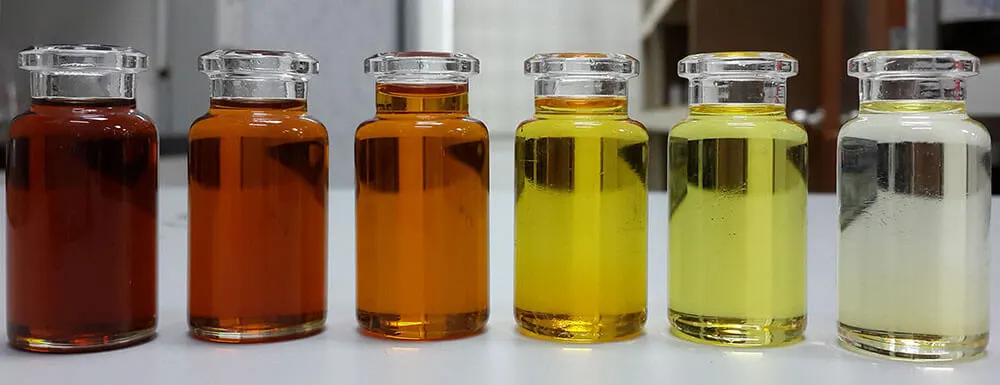
What Does Transformer Oil Do?
Transformer oil — also called insulating oil — is not just a liquid that fills the tank. It performs four critical functions that directly determine the reliability, lifespan, and safety of your transformer. Understanding these functions helps you appreciate why oil quality matters so much and why neglecting oil maintenance is one of the fastest ways to destroy an otherwise healthy transformer.
1. Electrical Insulation
The primary function of transformer oil is to provide electrical insulation between the high-voltage windings, the low-voltage windings, and the grounded tank. Air is a poor insulator — it breaks down at relatively low voltages. Oil, by contrast, has a dielectric strength many times higher than air, allowing transformer designers to place windings closer together, build more compact units, and operate at higher voltages safely.
The insulation quality of oil is measured by its breakdown voltage (BDV). Fresh mineral oil typically has a BDV of 60–70 kV. As oil degrades — through moisture absorption, contamination, or chemical ageing — its BDV drops. When BDV falls below safe thresholds, the risk of internal flashover and catastrophic failure increases dramatically. This is why regular oil testing is not optional — it is essential.
2. Heat Transfer and Cooling
Transformers generate heat during operation. Copper losses in the windings and core losses in the laminated steel core produce thermal energy that must be continuously removed. Transformer oil circulates through and around the windings, absorbing this heat and carrying it to the radiators or cooling fins on the outside of the tank, where it dissipates into the surrounding air.
Without effective oil circulation, hotspots develop inside the transformer. Localised overheating accelerates insulation ageing — for every 6–8 degrees Celsius above the rated temperature, insulation life is roughly halved. Oil viscosity plays a key role here: oil that is too viscous (thick) circulates poorly, especially during cold winter starts. Oil that has degraded and formed sludge deposits on windings acts as a thermal blanket, trapping heat exactly where it needs to escape.
3. Arc Quenching
Inside a transformer, small electrical discharges or arcs can occur — particularly at the tap changer contacts during switching operations, or during transient fault conditions. Transformer oil surrounds these contact points and rapidly extinguishes arcs by absorbing the energy and ionised gas produced. This arc-quenching ability prevents small electrical events from escalating into major faults.
When oil degrades, dissolved gases and moisture reduce its arc-quenching capacity. Carbonised particles from previous arcing events can form conductive paths that make future arcing more likely — creating a dangerous feedback loop. Clean, dry oil breaks this cycle and keeps the transformer safe.
4. Diagnostic Medium (Dissolved Gas Analysis)
Perhaps the most underappreciated function of transformer oil is its role as a diagnostic medium. When internal faults occur — overheating, partial discharge, arcing, or cellulose degradation — they produce specific gases that dissolve into the oil. By analysing these dissolved gases through a test called Dissolved Gas Analysis (DGA), engineers can identify the type, severity, and approximate location of internal faults without ever opening the transformer.
DGA is often called the "blood test" of transformers. Just as a doctor reads your blood results to detect diseases you cannot feel, an engineer reads DGA results to detect transformer faults you cannot see. A single DGA test can reveal thermal faults, electrical discharge, arcing damage, and cellulose insulation breakdown — often months or years before they cause a visible failure. This makes transformer oil not just a functional fluid but an invaluable early warning system.
Types of Transformer Oil
Not all transformer oils are the same. The type of oil you use affects insulation performance, fire safety, environmental impact, and compatibility with your transformer's design. Here is a comprehensive look at the four main types of transformer oil available in the market, with specific context for Pakistan.
Mineral Oil (Naphthenic and Paraffinic)
Mineral oil is the most widely used transformer oil in the world, and it dominates the Pakistani market almost entirely. It is a petroleum-derived product, refined from crude oil, and has been used in transformers for over a century.
There are two sub-types based on the crude oil base:
- Naphthenic mineral oil — the preferred choice for transformers. It has a low pour point (remains fluid at low temperatures), excellent oxidation stability, good solvency for moisture and gases (making DGA more reliable), and does not produce wax deposits. Most transformer oil supplied in Pakistan is naphthenic
- Paraffinic mineral oil — less commonly used in transformers because it has a higher pour point and tends to form wax crystals at lower temperatures, which can impede oil circulation. However, it has better oxidation stability in some formulations and is sometimes used when naphthenic grades are unavailable
Mineral oil is the standard choice for the vast majority of distribution and power transformers in Pakistan. It is compatible with all conventional transformer designs, widely available from local suppliers, and well understood by maintenance teams across the country.
Synthetic Ester Oil
Synthetic ester oils are chemically engineered fluids designed for applications where mineral oil's limitations become a concern — primarily fire safety and environmental risk. Synthetic esters have a fire point above 300 degrees Celsius (compared to approximately 160 degrees for mineral oil), making them the preferred choice for transformers installed inside buildings, underground substations, or near combustible materials.
Synthetic esters are also biodegradable and offer superior moisture tolerance — they can absorb and hold more moisture than mineral oil without significant loss of dielectric strength. This makes them forgiving in humid climates. However, they are significantly more expensive than mineral oil and are not yet widely stocked in Pakistan. They are used primarily in specialised installations and imported projects.
Natural Ester Oil
Natural ester oils are derived from vegetable sources — typically soybean, sunflower, or rapeseed oil. They are fully biodegradable, non-toxic, and have fire points exceeding 350 degrees Celsius. From an environmental and safety perspective, natural esters are the best available option.
Natural esters absorb moisture from cellulose insulation (paper), which can actually extend the life of the solid insulation inside the transformer. However, they have higher viscosity than mineral oil (affecting cooling in cold climates), lower oxidation stability without additives, and are the most expensive option. In Pakistan, natural ester use is limited to a few green-certified or internationally funded projects.
Silicone Oil
Silicone-based transformer fluids offer excellent fire resistance (fire point above 350 degrees Celsius) and thermal stability across a wide temperature range. They are chemically inert and do not react with most transformer materials. However, silicone oil has lower heat transfer efficiency than mineral oil and is expensive. It is used in niche applications — typically indoor or high-rise building transformers where fire risk must be absolutely minimised — and is rare in the Pakistani market.
Comparison Table
| Property | Mineral Oil (Naphthenic) | Synthetic Ester | Natural Ester | Silicone Oil |
|---|---|---|---|---|
| Fire point | ~160 °C | ~310 °C | ~360 °C | ~350 °C |
| Biodegradability | Low | High | Very high | Low |
| Moisture tolerance | Low | High | Very high | Moderate |
| Heat transfer | Excellent | Good | Good | Moderate |
| Oxidation stability | Good (with inhibitors) | Excellent | Moderate | Excellent |
| Availability in Pakistan | Widely available | Import only | Import only | Rare |
| Relative cost | Low | High | Highest | High |
| Best for | General use, all standard transformers | Indoor, fire-sensitive locations | Environmentally sensitive sites | High-rise, extreme fire risk |
Key Properties of Transformer Oil
Whether you are receiving a new transformer, evaluating used oil, or assessing filtration results, these are the properties that matter. Understanding them helps you read oil test reports intelligently and make informed maintenance decisions.
Breakdown Voltage (BDV)
Breakdown voltage measures the oil's ability to withstand electrical stress without breaking down (arcing). It is tested by applying an increasing voltage across two electrodes submerged in the oil until a spark occurs. Fresh mineral oil should have a BDV of at least 60 kV. Oil in service should be maintained above 40 kV for distribution transformers and above 50 kV for power transformers. A BDV below 30 kV is cause for immediate action — the oil is no longer providing adequate insulation.
Viscosity
Viscosity measures the oil's resistance to flow. Lower viscosity means easier circulation and better heat transfer. Transformer oil viscosity is typically specified at 40 degrees Celsius — for naphthenic mineral oil, values around 9–12 cSt (centistokes) are normal. High viscosity impairs cooling, particularly during cold starts in winter. If viscosity has increased significantly from the original specification, the oil may have degraded or been contaminated.
Flash Point
The flash point is the lowest temperature at which oil vapour ignites when exposed to an open flame. For mineral transformer oil, the flash point is typically around 140 degrees Celsius. A flash point that has dropped significantly from the baseline indicates light hydrocarbon contamination — potentially from internal arcing that has cracked oil molecules into lighter fractions. This is a safety concern.
Pour Point
The pour point is the lowest temperature at which oil still flows. For naphthenic mineral oil, this is typically around minus 40 degrees Celsius, making it suitable for all climatic conditions in Pakistan. Paraffinic oils have higher pour points (around minus 15 to minus 20 degrees Celsius) and may cause sluggish circulation in northern Pakistan during harsh winters.
Dielectric Dissipation Factor (Tan Delta)
The dielectric dissipation factor, often called tan delta or loss angle, measures how much electrical energy the oil absorbs and converts to heat instead of transmitting it. A low tan delta indicates clean, dry oil with good insulation properties. High tan delta values suggest contamination — moisture, dissolved metals, polar oxidation products, or conductive particles. For new oil, tan delta at 90 degrees Celsius should be below 0.005. Values above 0.05 indicate oil that needs attention.
Acidity (Neutralisation Value)
Oil acidity increases over time as the oil oxidises. Acidic oil attacks cellulose insulation (paper wrapping on windings), corrodes metal components, and promotes sludge formation. The acid number is expressed in mg KOH/g. Fresh oil has an acidity below 0.03 mg KOH/g. An acid number above 0.2 mg KOH/g indicates oil that is ageing and should be monitored closely. Above 0.5 mg KOH/g, the oil is attacking the insulation and should be replaced — filtration alone cannot remove dissolved acids effectively.
Interfacial Tension (IFT)
Interfacial tension measures the force between the oil surface and water. It is an extremely sensitive indicator of polar contaminants and oxidation products in the oil — even before acidity levels rise noticeably. Fresh oil has an IFT above 40 mN/m. As oil ages and polar compounds accumulate, IFT drops. Values below 25 mN/m suggest significant oil degradation, and values below 18 mN/m typically correlate with sludge formation. IFT is one of the earliest indicators that oil is heading toward trouble.
Moisture Content
Moisture is the single greatest enemy of transformer oil. Even small amounts of dissolved water dramatically reduce dielectric strength — oil with 30 ppm (parts per million) moisture has roughly half the BDV of dry oil. Moisture also accelerates cellulose ageing, promotes acid formation, and enables corrosion. For transformers operating at 33 kV and above, moisture should be kept below 15 ppm. For distribution transformers (11 kV), below 25 ppm is acceptable. Pakistan's humid climate — particularly in Lahore, Karachi, and coastal areas — makes moisture management a constant challenge. Regular oil dehydration is essential.
When to Filter vs When to Replace
One of the most common questions we receive at TransfoLine is: "Should I filter my transformer oil or replace it entirely?" The answer depends on the oil's condition, and understanding the distinction saves you money while protecting your transformer.
When Filtration Is the Right Choice
Oil filtration and dehydration is appropriate when the oil's base chemistry is still sound, but it has been contaminated by moisture, dissolved gases, or particulate matter. Specifically, filtration is the right choice when:
- BDV has dropped below acceptable levels but the acid number is still low (below 0.2 mg KOH/g)
- Moisture content is elevated — typically above 25 ppm for distribution transformers or above 15 ppm for power transformers
- Dissolved gas levels are high but DGA patterns indicate no active internal fault — the gases are from past events or normal ageing
- The oil is visually dirty — particles, fibres, or slight discolouration, but not black or sludgy
- Tan delta is elevated but the acid number remains acceptable — indicating moisture or polar contaminants that filtration can remove
- IFT is above 25 mN/m — suggesting the oil has not yet crossed into severe degradation territory
In these scenarios, vacuum dehydration and filtration can restore the oil to near-original condition, extending its service life by years at a fraction of the cost of full replacement.
When Full Replacement Is Necessary
Oil replacement becomes necessary when the oil has degraded beyond what filtration can recover. The key indicators are:
- High acid number — above 0.5 mg KOH/g. Filtration cannot remove dissolved acids from oil. Acidic oil is actively destroying the cellulose insulation on your windings, and every day it remains in service shortens the transformer's life
- Sludge formation — visible sludge deposits in the oil or on internal components. Sludge blocks cooling channels, insulates windings (trapping heat), and cannot be fully removed by filtration alone
- IFT below 18 mN/m — indicating severe oxidation and polar compound contamination that filtration cannot reverse
- Oil colour is very dark (black) — while colour alone is not definitive, very dark oil combined with high acidity and low IFT confirms irreversible degradation
- PCB contamination — if oil tests positive for polychlorinated biphenyls (PCBs), it must be replaced and disposed of according to environmental regulations. PCB-contaminated oil cannot be filtered and returned to service
- Flash point has dropped significantly — indicating internal arcing has broken down oil molecules, producing lighter, more flammable hydrocarbon fractions that cannot be removed by standard filtration
Decision Framework
Here is a practical decision framework TransfoLine engineers use in the field:
- Test the oil — get BDV, moisture, acidity, IFT, and DGA results before deciding anything
- If acid number is below 0.2 and IFT is above 25 — filter and dehydrate. The oil is recoverable
- If acid number is between 0.2 and 0.5 and IFT is between 18 and 25 — filter as a short-term measure, but plan for replacement within 12–18 months. Monitor closely
- If acid number is above 0.5 or IFT is below 18 or sludge is present — replace the oil. Filtration will not solve the underlying degradation
- If DGA shows active fault gases — address the internal fault first. Replacing oil without fixing the root cause wastes new oil
When in doubt, contact TransfoLine with your oil test results. Our engineers will recommend the most effective and economical approach for your specific situation.
Oil Filtration and Dehydration Process
Oil filtration and dehydration is one of the most effective and economical maintenance interventions you can perform on a transformer. When done correctly, it restores oil to near-new condition, extends transformer life, and prevents the need for full oil replacement. Here is how the process works.
How Vacuum Dehydration and Filtration Works
The process uses a specialised oil dehydration plant that circulates oil from the transformer through a series of treatment stages:
- Pre-filtration — the oil first passes through coarse filters that remove large particulate contaminants — metal particles, fibres, dust, and sediment. This protects the finer downstream filtration stages
- Heating — the oil is heated to approximately 60–70 degrees Celsius. Heating reduces oil viscosity (improving flow through filters), increases the vapour pressure of dissolved moisture and gases (making them easier to extract), and improves filtration efficiency
- Vacuum degassing — the heated oil enters a vacuum chamber where the pressure is reduced to approximately 1–5 mbar. At this low pressure, dissolved moisture evaporates out of the oil and dissolved gases (oxygen, nitrogen, carbon dioxide, and fault gases) are released. The extracted moisture and gases are removed from the chamber by vacuum pumps
- Fine filtration — the degassed oil passes through progressively finer filters, typically down to 1 micron or less, removing any remaining particulate matter
- Return to transformer — the treated oil is returned to the transformer, and the circulation continues until all oil in the tank has been processed multiple times (typically 3–6 passes) and target parameters are achieved
What Results to Expect
A properly performed filtration and dehydration service should achieve:
- BDV restored to above 60 kV (from as low as 20–30 kV before treatment)
- Moisture reduced to below 10 ppm (from levels that may have been 40–60 ppm or higher)
- Dissolved gas content reduced by 80–95%
- Particulate count reduced to negligible levels
- Tan delta improved (reflecting removal of polar contaminants and moisture)
For a detailed walkthrough of the dehydration process, equipment used, and what to expect during a service visit, read our dedicated Transformer Oil Dehydration Guide.
How Often Should You Filter?
The frequency depends on the transformer's operating conditions, age, and environment:
- New transformers — oil should be filtered and tested before initial energisation, then tested annually. Filtration may not be needed for 3–5 years if the transformer is well sealed and operating within rated conditions
- Transformers in harsh environments — units exposed to high humidity, dust, temperature extremes, or heavy loading should be tested every 6–12 months and filtered as test results indicate
- Older transformers (15+ years) — oil degradation accelerates with age. Annual testing is essential, and filtration every 2–3 years is typical. Include oil filtration in your maintenance checklist
- After any internal work — if the transformer has been opened for repairs, winding work, or gasket replacement, the oil should be filtered and dehydrated before re-energisation. Opening the tank exposes the oil and insulation to atmospheric moisture
Oil Testing — Your Early Warning System
If transformer oil is the lifeblood of your transformer, then oil testing is the health check-up. Regular testing detects problems early — when they are small, manageable, and inexpensive to fix — rather than waiting for a catastrophic failure that destroys the transformer and halts your production.
Dissolved Gas Analysis (DGA)
DGA is the most powerful diagnostic tool available for oil-filled transformers. It detects and quantifies seven key gases dissolved in the oil:
- Hydrogen (H2) — indicates partial discharge or low-energy electrical faults
- Methane (CH4) and Ethane (C2H6) — indicate low-temperature thermal faults (below 300 degrees Celsius)
- Ethylene (C2H4) — indicates high-temperature thermal faults (300–700 degrees Celsius)
- Acetylene (C2H2) — the most concerning gas. Indicates high-energy arcing (above 700 degrees Celsius). Even small amounts of acetylene demand investigation
- Carbon monoxide (CO) and Carbon dioxide (CO2) — indicate cellulose (paper) insulation degradation. The CO/CO2 ratio helps estimate the severity and rate of paper ageing
By analysing the ratios and trends of these gases over time, engineers can determine whether a fault is thermal, electrical, or insulation-related — and whether it is stable, progressing slowly, or escalating rapidly. DGA should be performed annually at minimum for critical transformers, and every 2–3 years for standard distribution units.
Breakdown Voltage (BDV) Testing
BDV testing is the simplest and most commonly performed oil test. It directly measures the oil's dielectric strength — its ability to insulate. The test is quick, relatively inexpensive, and gives an immediate pass/fail indication. However, BDV alone does not tell you why the oil has degraded — it only tells you that it has. Always combine BDV with other tests for a complete picture.
Moisture Testing
Moisture content is measured in parts per million (ppm) using the Karl Fischer titration method. This is a highly accurate test that detects dissolved water in the oil. As noted earlier, even small amounts of moisture dramatically reduce BDV and accelerate insulation ageing. Moisture testing should accompany every BDV test.
Acidity Testing
The acid number (or neutralisation value) quantifies the concentration of acidic compounds in the oil, expressed as mg KOH/g. Rising acidity is a clear indicator that the oil is oxidising and will eventually form sludge. Tracking acidity trends over time helps you predict when oil will need replacement — giving you time to plan and budget rather than reacting to an emergency.
Recommended Testing Schedule
| Test | Critical Transformers | Standard Distribution | After Maintenance / Repair |
|---|---|---|---|
| DGA | Every 6–12 months | Every 1–3 years | Before re-energisation |
| BDV | Annually | Annually | Before re-energisation |
| Moisture | Annually | Annually | Before re-energisation |
| Acidity | Annually | Every 1–2 years | Before re-energisation |
| IFT | Annually | Every 1–2 years | Before re-energisation |
| Tan delta | Annually | Every 2–3 years | Before re-energisation |
For a detailed explanation of each test, how to interpret results, and what action to take based on readings, see our dedicated Transformer Oil Testing Guide.
"During routine oil testing, TransfoLine's team found elevated moisture and dissolved gases in our 1500 KVA transformer — readings that our own maintenance staff had missed. They performed on-site dehydration and filtration, brought the BDV from 28 kV back to 65 kV, and the transformer has been running perfectly since. Without that early detection, we would have been looking at a winding failure within months."
— Maintenance Manager, Steel Mill, Sheikhupura
Handling, Storage and Safety
Transformer oil quality can be ruined before it ever reaches the transformer — through improper storage, careless handling during filling, or contamination during transport. These guidelines protect your oil investment and ensure the oil performs as intended when it enters service.
How to Store Transformer Oil Drums
- Store indoors — keep oil drums in a covered, dry, well-ventilated warehouse or storage area. Never store drums outdoors where they are exposed to rain, direct sunlight, and temperature cycling
- Keep drums sealed — even a slightly loose bung allows moisture-laden air to enter. In Pakistan's humid climate (particularly during monsoon season), a drum stored with a loose seal can absorb enough moisture to render the oil unusable
- Store horizontally or inverted — when drums are stored upright, rain or condensation collects on the top surface around the bung seal. Temperature cycling (hot days, cool nights) creates a breathing effect that draws this water into the drum. Storing drums on their side or inverted prevents water pooling around the seal
- First-in, first-out — use older stock before newer stock. Mineral oil has a shelf life, and while it is measured in years, unnecessarily long storage increases the risk of contamination and additive settling
- Keep away from contaminants — do not store transformer oil near chemicals, solvents, paints, or dusty environments. Even trace contamination can compromise dielectric properties
- Label clearly — mark each drum with the oil type, grade, supplier, and date received. Never mix different oil types or grades unless compatibility has been verified by testing
Handling During Transformer Filling
- Use clean, dry equipment — all hoses, pumps, filters, and containers used for oil transfer must be clean and free of moisture. Even residual water from washing equipment can contaminate fresh oil
- Filter oil during filling — pass oil through a filter during transfer from drum to transformer. This removes any particles or moisture that may have entered during storage or transport
- Minimise air exposure — fill the transformer as quickly as practical to minimise the time the tank is open to atmospheric moisture. In Lahore's humid summer months, open exposure for even a few hours can measurably increase oil moisture content
- Vacuum fill when possible — for new installations or major overhauls, the transformer tank should be evacuated (vacuum applied) before filling. This removes trapped air and moisture from the insulation and ensures complete oil penetration of the winding paper
- Test oil after filling — always test the oil after it is in the transformer and before energisation. This confirms that the filling process did not introduce contamination
Environmental Regulations and Oil Disposal in Pakistan
Transformer oil disposal is governed by environmental regulations that all facility owners should understand:
- Never dump oil — discarding transformer oil into drains, soil, rivers, or landfills is illegal and environmentally destructive. Mineral oil does not biodegrade quickly and can contaminate groundwater and soil for decades
- PCB testing — older transformers (particularly those manufactured before 1990) may contain oil contaminated with polychlorinated biphenyls (PCBs), which are toxic and carcinogenic. Before disposing of or recycling used transformer oil, it must be tested for PCBs. PCB-contaminated oil requires specialised disposal by certified waste handlers
- PCB-free certification — when purchasing used transformers or used oil, always request a PCB-free certification from the seller. TransfoLine provides PCB-free certification with all oil services and used transformer sales
- Recycling options — PCB-free used transformer oil can be re-refined into base oil, used as industrial fuel, or processed through licensed recycling facilities. TransfoLine can arrange proper disposal and recycling as part of our oil service
- Spill containment — transformer installations should include oil containment bunds (retention walls or pits) sized to hold at least 110% of the total oil volume. This prevents soil and water contamination in case of a tank leak or rupture
Safety Precautions
- Avoid skin contact — while mineral transformer oil is not acutely toxic, prolonged or repeated skin contact can cause irritation. Use gloves and protective clothing when handling oil
- Fire safety — mineral oil is combustible. Keep ignition sources away from oil handling areas. Have fire extinguishers rated for oil fires (Class B) readily available
- Ventilation — ensure adequate ventilation when working with oil in enclosed spaces. Hot oil produces vapours that can be irritating to eyes and respiratory passages
- Material Safety Data Sheet (MSDS) — keep the oil supplier's MSDS on file and accessible to all personnel who handle transformer oil. The MSDS provides specific safety, first-aid, and emergency response information for the exact product in use
For replacement oil, gaskets, silica gel breathers, oil level gauges, and other spare parts, contact TransfoLine for availability and specifications matched to your transformer model.
Frequently Asked Questions
What type of oil is used in transformers in Pakistan?
The vast majority of transformers in Pakistan use naphthenic mineral oil. It offers excellent dielectric strength, good heat transfer properties, and is widely available from local suppliers. Synthetic esters and natural esters are used in fire-sensitive or environmentally sensitive installations but remain uncommon in the Pakistani market. For most distribution and power transformers, mineral oil is the standard and recommended choice.
How often should transformer oil be replaced?
There is no fixed replacement schedule — replacement is driven by oil condition, not calendar age. Annual oil testing determines when action is needed. If test results show low BDV or high moisture but acceptable acidity and IFT, filtration can restore the oil without replacement. Full replacement is needed when the acid number exceeds 0.5 mg KOH/g, sludge is present, or IFT drops below 18 mN/m. Some well-maintained transformers run on the same oil for 15–20 years with periodic filtration; others in harsh conditions may need replacement within 8–10 years.
What is the difference between oil filtration and oil replacement?
Oil filtration uses vacuum dehydration and mechanical filtration to remove moisture, dissolved gases, and particles from existing oil, restoring it to serviceable condition without discarding it. Oil replacement involves draining the old oil entirely, flushing the tank, and refilling with fresh oil. Filtration is faster, less expensive, and preferred whenever the oil's base chemistry is sound. Replacement is necessary when the oil has degraded irreversibly — high acidity, sludge, or contamination that filtration cannot address.
How should transformer oil drums be stored?
Store drums indoors in a cool, dry, covered area. Keep drums sealed and store them horizontally or inverted to prevent rainwater or condensation from seeping past the bung seal. Never store drums outdoors where water can pool on top — this is the most common cause of moisture contamination in stored oil. Use first-in, first-out rotation, and keep oil away from chemicals, solvents, and dusty environments.
What is DGA testing and why is it important?
Dissolved Gas Analysis (DGA) measures gases dissolved in transformer oil — hydrogen, methane, ethane, ethylene, acetylene, carbon monoxide, and carbon dioxide. Each gas or combination indicates a specific internal fault: partial discharge, thermal overheating, arcing, or cellulose degradation. DGA is the single most valuable predictive maintenance tool for transformers, often detecting problems months or years before they cause visible failure. It is essentially a medical scan for your transformer.
Can old transformer oil be recycled or disposed of safely?
Yes. Used oil that is PCB-free can be re-refined or used as industrial fuel through licensed recycling facilities. Never dump transformer oil into drains, soil, or water bodies — it is illegal and causes long-term environmental damage. For older transformers, always test oil for PCBs before disposal. TransfoLine handles oil disposal and recycling as part of our oil service package, ensuring compliance with environmental regulations and providing PCB-free certification.
Need oil testing, filtration or replacement?
TransfoLine provides complete transformer oil services — testing, vacuum dehydration, filtration, and full oil replacement — on-site at your facility anywhere in Pakistan. Send us your oil test results or request a service visit.
Book Oil Service →