
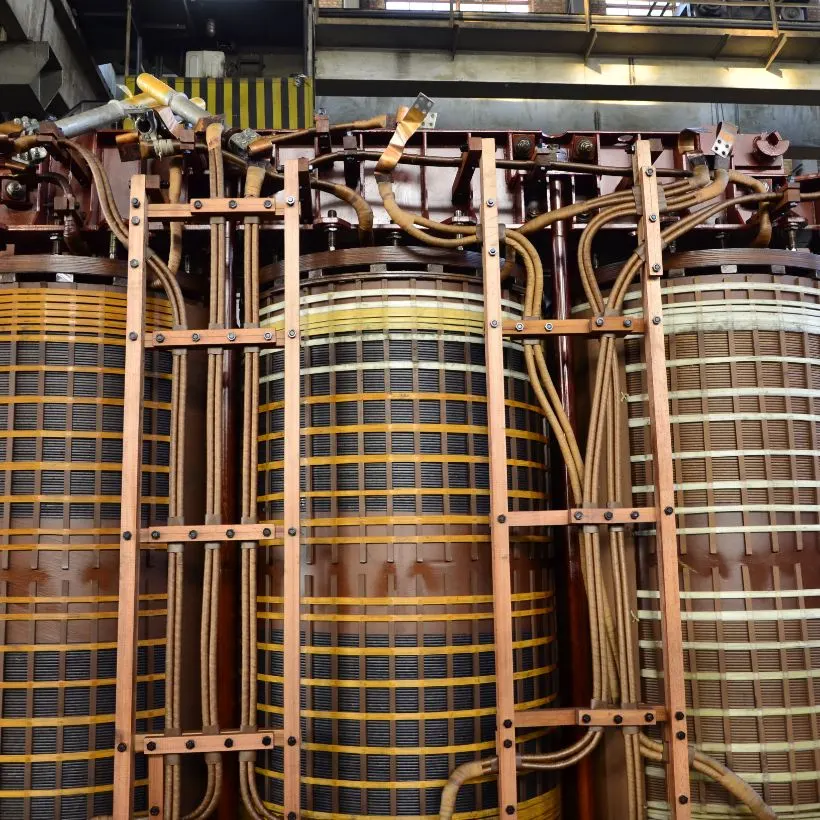
Direct Engineering Answer: Electrolytic copper (99.99% pure) has 60% lower electrical resistance than aluminium, generating significantly lower load losses ($I^2R$). Over 10 years of industrial operation in Pakistan, a 200 kVA copper transformer saves over Rs. 1.8 Million in electricity bills compared to an aluminium unit, while resisting thermal expansion and mechanical short-circuit forces.
1. The Deceptive Economy of Low-Cost Aluminium Transformers
In Pakistan's wholesale electrical markets—such as Shah Alam Market in Lahore, Nishtar Road in Karachi, and local regional workshops—buyers frequently encounter transformers priced 15% to 25% lower than reputable market averages. Almost universally, these cheaper units are wound with aluminium conductor wire rather than electrolytic copper, or worse, feature hybrid coils where aluminium wire is crimped to short copper lead tails to deceive unsuspecting purchasers.
While an aluminium-wound transformer may function initially, its higher internal resistance and inferior mechanical characteristics lead to excessive $I^2R$ power waste, loose terminal joints, and early coil burnout during hot Pakistani summers. Learn about TransfoLine's certified 100% pure copper distribution transformers.
2. Fundamental Metallurgy: Copper vs Aluminium Conductivity
The international electrical benchmark for conductivity is the International Annealed Copper Standard (100% IACS):
- Electrolytic Copper (99.99% ETP): Electrical conductivity of 100% to 101% IACS; resistivity ≈ $1.68 imes 10^{-8} \ \Omega\cdot ext{m}$ at 20°C.
- Electrical Grade Aluminium (EC Grade): Electrical conductivity of only 61% IACS; resistivity ≈ $2.82 imes 10^{-8} \ \Omega\cdot ext{m}$ at 20°C (approx. 60% higher resistance than copper).
To carry the same electrical current without overheating, an aluminium conductor must have a 66% larger cross-sectional area than a copper conductor, requiring a larger magnetic core, higher oil volume, and a bulkier overall tank footprint.
3. I²R Load Losses & Operating Temperature Differences
Load losses inside a transformer increase directly with the resistance of the winding conductors (P_loss = I^2 × R). Because aluminium has significantly higher resistance, aluminium-wound transformers generate substantially higher internal heat losses under full load. In ambient summer temperatures exceeding 45°C in Punjab and Sindh, this extra heat accelerates the thermal depolymerization of cellulose paper insulation, reducing transformer lifespan from 30 years to less than 10 years.
4. Thermal Expansion & Loose Terminal Contact Arcing
Under alternating daily load cycles, transformer windings expand and contract thermally. The coefficient of linear thermal expansion for aluminium ($23 imes 10^{-6} / ext{K}$) is 38% higher than copper ($16.5 imes 10^{-6} / ext{K}$). This pronounced thermal cycling causes bolted aluminium terminal connections and crimped lugs to loosen over time, leading to high-resistance contact hotspots, terminal arcing, and phase flashovers. Explore our transformer repair and rewinding services.
5. Mechanical Tensile Strength During Heavy Short-Circuit Faults
When an external short circuit occurs on a downstream 415V distribution line, electromagnetic forces exert massive radial bursting forces on the coils. Electrolytic copper possesses a tensile yield strength of 200 to 250 MPa—more than double that of electrical-grade aluminium (80 to 120 MPa). Under heavy short-circuit stress, copper coils maintain structural rigidity, while soft aluminium windings can deform, stretch, and suffer turn-to-turn insulation punctures.
6. 10-Year Electricity Bill Savings Calculation (Pakistani Tariff Models)
Consider a 200 kVA transformer running in a manufacturing plant 16 hours/day, 300 days/year, at an average 75% load under industrial electricity tariffs of Rs. 40/kWh:
| Evaluation Metric | 100% Pure Copper Transformer | Aluminium-Wound Transformer |
|---|---|---|
| Full-Load Copper/Load Loss | 2,600 Watts (2.6 kW) | 4,200 Watts (4.2 kW) |
| Average Load Loss (75% Load) | 1,462 Watts (1.46 kW) | 2,362 Watts (2.36 kW) |
| Annual Wasted Electrical Energy | 7,017 kWh / year | 11,337 kWh / year |
| Annual Loss Cost (@ Rs. 40/kWh) | Rs. 280,680 | Rs. 453,480 |
| 10-Year Cumulative Energy Cost | Rs. 2,806,800 | Rs. 4,534,800 |
| 10-Year Electricity Bill Savings with Copper | Rs. 1,728,000 (Rs. 1.72 Million Net Savings) | |
The electricity bill savings alone pay for the entire initial cost difference of a copper transformer in less than 18 to 24 months!
7. Galvanic Corrosion in Humid & Industrial Environments
Aluminium is chemically highly reactive. When exposed to atmospheric moisture containing airborne salts or chemical pollutants, bimetallic galvanic corrosion rapidly attacks aluminium-copper joints, causing severe contact degradation. Copper is chemically noble and immune to oxidation when submerged in transformer oil.
8. Workshop Testing: How to Verify Genuine 99.99% Copper Windings
TransfoLine recommends three foolproof tests to verify genuine copper construction before accepting delivery:
- Kelvin 4-Wire DC Resistance Test: Precise milliohm measurement using a digital micro-ohmmeter; aluminium windings display ~60% higher resistance per unit weight.
- Total Weight & Density Check: Copper density (8.96 g/cm3) is more than three times higher than aluminium (2.70 g/cm3). A genuine 200 kVA copper transformer weighs 150 kg to 250 kg more than an aluminium equivalent.
- Witness Loss Measurement: Accurate measurement of load losses at 75°C during official FAT testing.
9. TransfoLine 100% Electrolytic Copper Guarantee & Test Dossiers
Every transformer manufactured or remanufactured by TransfoLine comes with a legally certified 100% Electrolytic Copper Guarantee, complete factory test certificates, and a full 12-month replacement warranty.
10. Complete Technical Comparison: Electrolytic Copper vs Electrical Aluminium
| Physical / Electrical Property | Electrolytic Copper (99.99% ETP) | Electrical Grade Aluminium (EC) |
|---|---|---|
| Electrical Conductivity (% IACS) | 100% – 101% | 61% |
| Electrical Resistivity @ 20°C | 1.68 × 10⁻⁸ Ω·m | 2.82 × 10⁻⁸ Ω·m (+68% higher) |
| Tensile Yield Strength | 200 – 250 MPa | 80 – 120 MPa (Weak) |
| Coefficient of Thermal Expansion | 16.5 × 10⁻⁶ / K | 23.0 × 10⁻⁶ / K (+39% higher expansion) |
| Thermal Conductivity | 390 W/(m·K) | 230 W/(m·K) |
| Material Density | 8.96 g/cm³ | 2.70 g/cm³ |
| Resistance to Creep & Loose Terminals | Excellent (Stable bolted joints) | Poor (Prone to relaxation & hotspots) |
| Galvanic Corrosion Susceptibility | Immune in mineral oil | High (Forms non-conductive oxide film) |
11. Case Study: Energy Efficiency Audit in a Faisalabad Textile Mill
A textile weaving unit in Faisalabad replaced an old 400 kVA aluminium-wound distribution transformer with a TransfoLine 400 kVA prime CRGO 100% electrolytic copper transformer. Precision energy loggers installed at the 11kV incoming feeder recorded a reduction in continuous core and copper losses of 2.1 kW.
Operating 24/7 for 350 days per year at an average commercial electricity tariff of Rs. 42 per kWh, the mill saved 17,640 kWh annually, reducing their annual electricity bill by Rs. 740,880 every year and recovering the cost differential within 14 months.
Frequently Asked Questions
FAQ Why are aluminium transformers cheaper to purchase upfront?
Aluminium raw material cost is significantly lower than copper, reducing initial manufacturing costs by 15% to 25%.
FAQ How much money does a copper transformer save in electricity bills?
A 200 kVA copper transformer saves over Rs. 170,000 annually and more than Rs. 1.7 Million over 10 years compared to an aluminium unit at Rs. 40/kWh tariffs.
FAQ Can a layman distinguish between copper and aluminium transformer coils?
Visually it can be difficult if unscrupulous vendors paint or crimp copper ends onto aluminium wires; only a precise micro-ohmmeter DC resistance test or weight check provides proof.
FAQ Does TransfoLine use any aluminium in its distribution transformers?
No, TransfoLine manufactures exclusively with 99.99% pure electrolytic oxygen-free copper conductors.
FAQ Are copper transformers more resistant to summer heat in Pakistan?
Yes, copper has superior thermal conductivity and lower resistance losses, operating significantly cooler during 45°C+ summer weather.
Need Direct Technical Assistance or a Factory-Direct Quote?
TransfoLine supplies, installs, overhauls, and repairs heavy industrial transformers across Pakistan with nationwide 48-hour delivery, genuine WAPDA P-10 compliance, and 12-month full warranty.