
Industrial Solar Net-Metering in Pakistan: Complete NEPRA & DISCO (LESCO, KE, FESCO) Guide
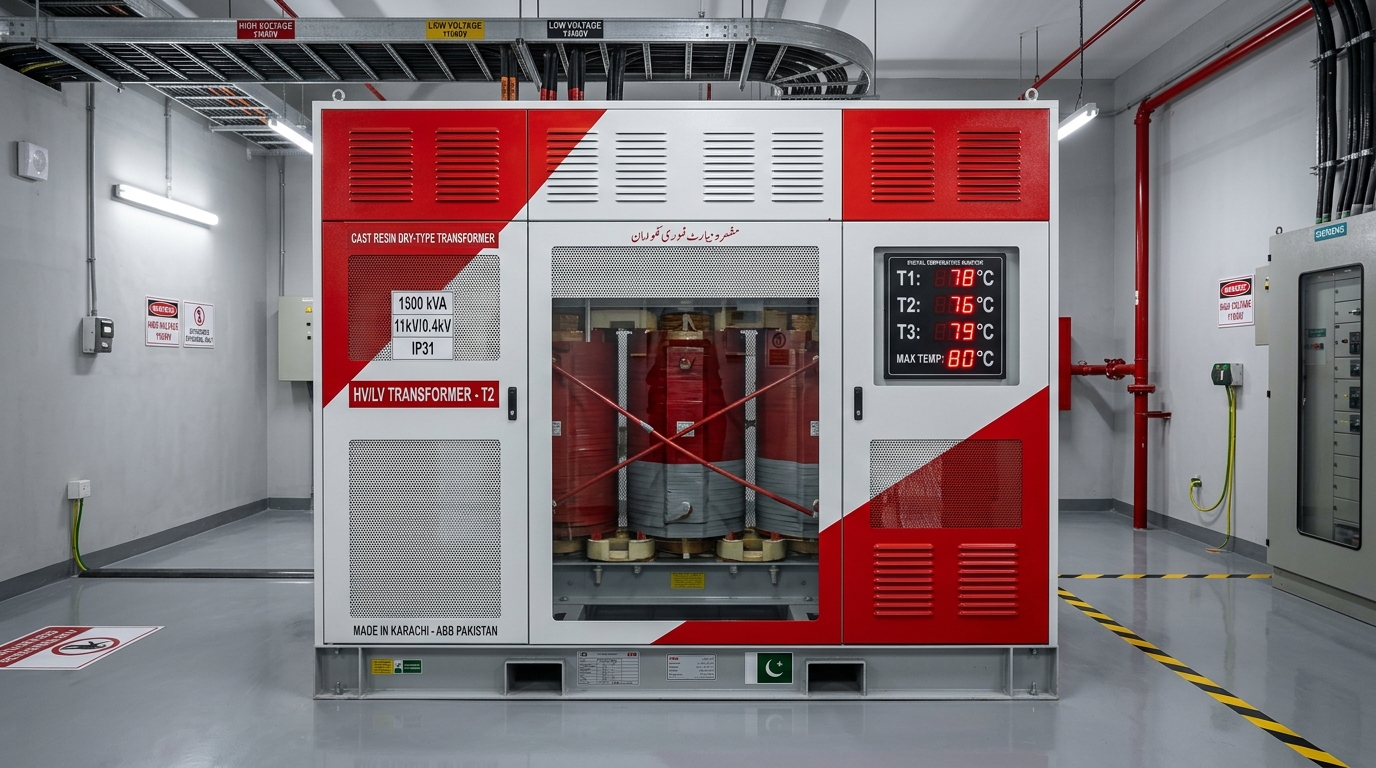
For industrial manufacturing units in Pakistan facing escalating electricity tariffs crossing PKR 50/kWh, commercial-scale solar net-metering (500 kW to 5 MW) offers an unparalleled financial opportunity to monetize peak daytime solar energy by exporting surplus electricity back to the national grid. However, while residential net-metering under 25 kW is relatively straightforward, executing an 11 kV medium-voltage industrial net-metering connection requires navigating stringent NEPRA regulations, grid stability load-flow audits, certified bi-directional green meters, and high-voltage protection relay coordination with power distribution companies (DISCOs like LESCO, K-Electric, FESCO, MEPCO, IESCO, and GEPCO).
1. NEPRA Regulatory Framework for Distributed Generation (DG)
Under the NEPRA (Alternative & Renewable Energy) Distributed Generation and Net Metering Regulations, any commercial or industrial consumer having an authorized three-phase connection can install solar generation up to their sanctioned load limit. Key statutory criteria include:
- Sanctioned Load Cap: The maximum allowable solar generator capacity cannot exceed 100% of the consumer’s sanctioned load (kVA/kW) as approved by the DISCO.
- Distribution Feeder Limit: Total cumulative distributed generation connected to a specific 11kV distribution feeder cannot exceed 80% of the rated capacity of that feeder or the 132/11kV power transformer at the grid substation.
- Interconnection Voltage Standard: Generation systems above 250 kW are legally mandated to interconnect at 11,000 Volts (11 kV) or 33,000 Volts (33 kV) medium-voltage level, necessitating a dedicated step-up transformer and VCB switchgear panel.
2. Step-by-Step 6-Stage Industrial Net-Metering Roadmap
TransfoLine manages the end-to-end execution of industrial net-metering projects through a structured 6-stage lifecycle:
| Stage | Action & Deliverables | Authority Involved | Timeline |
|---|---|---|---|
| Stage 01: Feasibility | 11kV Feeder load flow study, fault level calculation, and SLD submission | Local DISCO Sub-Divisional Office | 5–7 Days |
| Stage 02: Application | Formal Schedule-I filing with equipment type-test certs and PEC engineer sign-off | DISCO Executive Engineer (XEN) | 10 Days |
| Stage 03: NOC Issuance | DISCO Interconnection Study Approval & signing of standard Net-Metering Agreement | DISCO Chief Commercial Officer | 14 Days |
| Stage 04: NEPRA License | Grant of Generation License (Form-II) under Distributed Generation Category | NEPRA Headquarters, Islamabad | 15–20 Days |
| Stage 05: Meter Testing | Laboratory testing and calibration of 11kV bi-directional Green Meter and PT/CT unit | DISCO M&T (Metering & Testing) Lab | 5–7 Days |
| Stage 06: Energization | Joint site commissioning, anti-islanding trip demonstration, and commercial COD | DISCO GSO & Operations Team | 1–2 Days |
3. Technical Requirements for 11kV Bi-Directional Metering Substation
Unlike standard LT import meters, medium-voltage industrial net-metering demands specialized hardware engineered for 4-quadrant bi-directional active and reactive energy measurement:
- Class 0.2S Bi-Directional Green Meter: Certified electronic energy meter capable of independent recording of Import kWh, Export kWh, Import kVARh, Export kVARh, and Maximum Demand Indicator (MDI) across Peak and Off-Peak time-of-use (TOU) tariff windows.
- Current & Potential Transformers (CT/PT Unit): 11kV oil-immersed dual-secondary metering CTs (Class 0.2 accuracy for tariff billing and Class 5P10 for relay protection) paired with precision 11,000V / 110V potential transformers.
- Anti-Islanding Protection Relays (IEEE 1547 / IEC 62116): Microprocessor-based numerical relays programmed to trip the 11kV vacuum circuit breaker (VCB) within < 100 milliseconds in the event of an upstream grid feeder blackout, eliminating hazardous back-feeding into lines being serviced by DISCO linemen.
4. Net-Metering Tariff & Financial Settlement Accounting
The financial reconciliation of exported solar energy is governed by NEPRA’s netting mechanism:
$$ ext{Net Monthly Bill (PKR)} = \left[ E_{ ext{import\_offpeak}} - E_{ ext{export\_offpeak}} ight] imes T_{ ext{offpeak}} + \left[ E_{ ext{import\_peak}} imes T_{ ext{peak}} ight] - ext{Export Credits}$$Under current Pakistani utility billing rules:
- Off-Peak Energy Offsetting: Exported units directly cancel out imported units during normal daytime off-peak hours on a 1:1 basis.
- Surplus Energy Roll-Over: If monthly export exceeds import, the surplus kWh balance is credited to the consumer’s account and rolls over into subsequent billing cycles.
- Quarterly Cash Settlement: Accumulated net credits at the end of each fiscal quarter (September, December, March, June) can be financially disbursed to the industrial consumer at the prevailing NEPRA national average power purchase price (NAPP).
5. Turnkey Solutions from TransfoLine
TransfoLine offers single-window engineering, procurement, and construction (EPC) for industrial solar substations across Pakistan, including:
- Custom multi-winding 0.8kV to 11kV inverter step-up transformers (500 kVA to 5 MVA).
- 11kV VCB switchgear panels with calibrated DISCO M&T metering compartments.
- Full liaison with NEPRA and DISCO engineering teams for guaranteed NOC approvals.
Accelerate Your Industrial Solar Net-Metering Approval
Let TransfoLine handle your 11kV grid study, transformer manufacturing, and NEPRA generation licensing with guaranteed zero rejection.