
The Physics of Summer Heat Stress on Transformers in Lahore
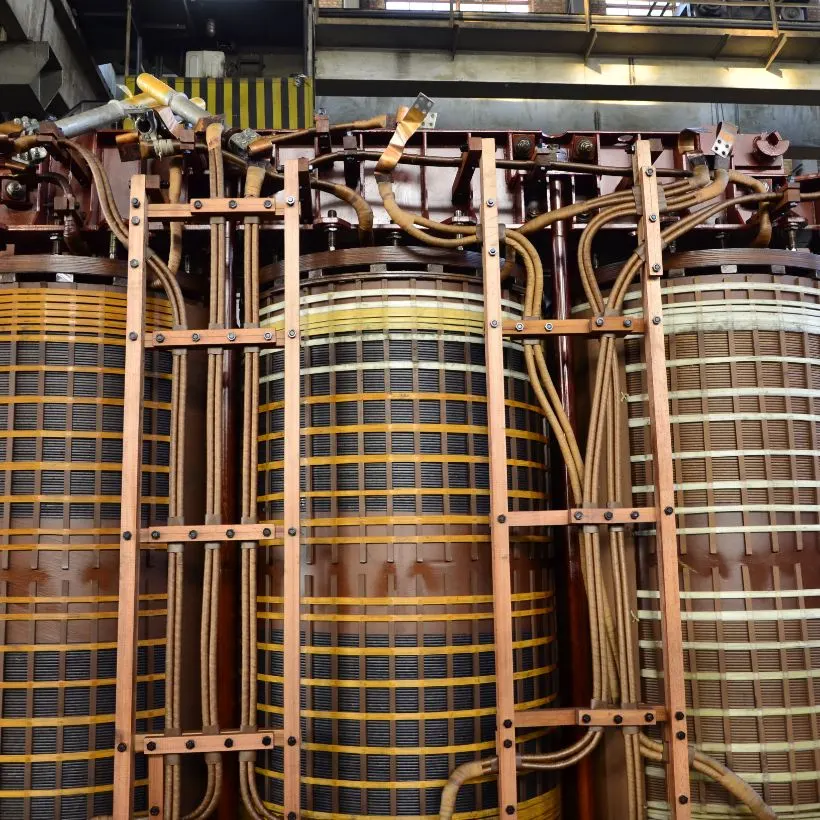
A power or distribution transformer is a closed thermal machine. Electrical losses generated in the core (hysteresis and eddy current no-load losses, $P_{fe}$) and in the copper windings ($I^2R$ load losses, $P_{cu}$) generate heat that must be continuously transferred through the mineral oil to the external radiator fins, and finally dissipated into the surrounding ambient air via natural convection and radiation (ONAN cooling).
In Lahore's climate, this heat exchange mechanism breaks down due to three compounding summer factors:
- Extreme Ambient Baselines: Standard international transformers (IEC 60076) are designed for a reference ambient temperature of 20°C yearly average and a maximum peak ambient of 40°C. In Lahore's industrial belts (Sundar, Kot Lakhpat, Multan Road), summer ambient air routinely reaches 45°C to 47°C in shaded areas and over 52°C inside unventilated brick substation rooms!
- Direct Solar Radiation Absorption: Outdoor pad-mounted or pole-mounted transformers exposed to direct midday sun absorb substantial solar heat flux, adding an effective 5°C to 8°C thermal penalty to the tank surface.
- Compounded Summer Electrical Loads: High ambient temperatures force continuous operation of industrial chillers, cooling towers, and factory air-conditioning compressors, pushing transformers to 90%–105% continuous electrical loading simultaneously with peak ambient thermal stress.
Montsinger's 6-Degree Rule: How Summer Heat Halves Insulation Life
The mechanical and dielectric lifespan of a transformer is governed by the thermal degradation of its cellulose paper insulation. In electrical engineering, this relationship is expressed by Montsinger’s Life Rule (Arrhenius Equation Adaptation):
In practical terms, for every 6°C increase in winding hot-spot temperature above the rated design limit (typically 98°C for normal life expectancy of 30 years):
- The rate of chemical thermal degradation of the paper insulation doubles.
- The expected mechanical lifespan of the transformer is cut by exactly 50%!
Operating a transformer in Lahore with an unmanaged winding hot-spot temperature of 116°C (just 18°C above design) ages the insulation eight times faster than normal. A brand-new transformer subjected to two consecutive uncooled Lahore summers can lose 10 to 15 years of insulation life in just 180 days of operation!
Ambient Temperature Derating Formulas for Pakistani Substation Design
If your substation is operating in an ambient environment exceeding 40°C, you cannot safely draw 100% nameplate kVA without dangerous overheating. The transformer must be thermally derated.
According to IEEE C57.91 and WAPDA DDS-84 engineering guidelines, the allowable continuous kVA load capacity ($S_{allow}$) under elevated ambient temperature ($T_{amb}$) is calculated as:
For example, during a 46°C heatwave in Lahore on a 1,000 kVA transformer:
- Temperature excess above standard: $46 - 40 = 6^\circ ext{C}$
- Capacity derating penalty: $6 imes 1.5\% = 9\%$ derating
- Maximum safe continuous load: $1,000 imes (1 - 0.09) = \mathbf{910 ext{ kVA}}$
If your factory attempts to draw the full 1,000 kVA or 1,050 kVA during this 46°C peak, the oil temperature will surge beyond 95°C, triggering an automatic thermal trip or catastrophic gasification breakdown.
Radiator Fin Descaling & Substation Ventilation Engineering
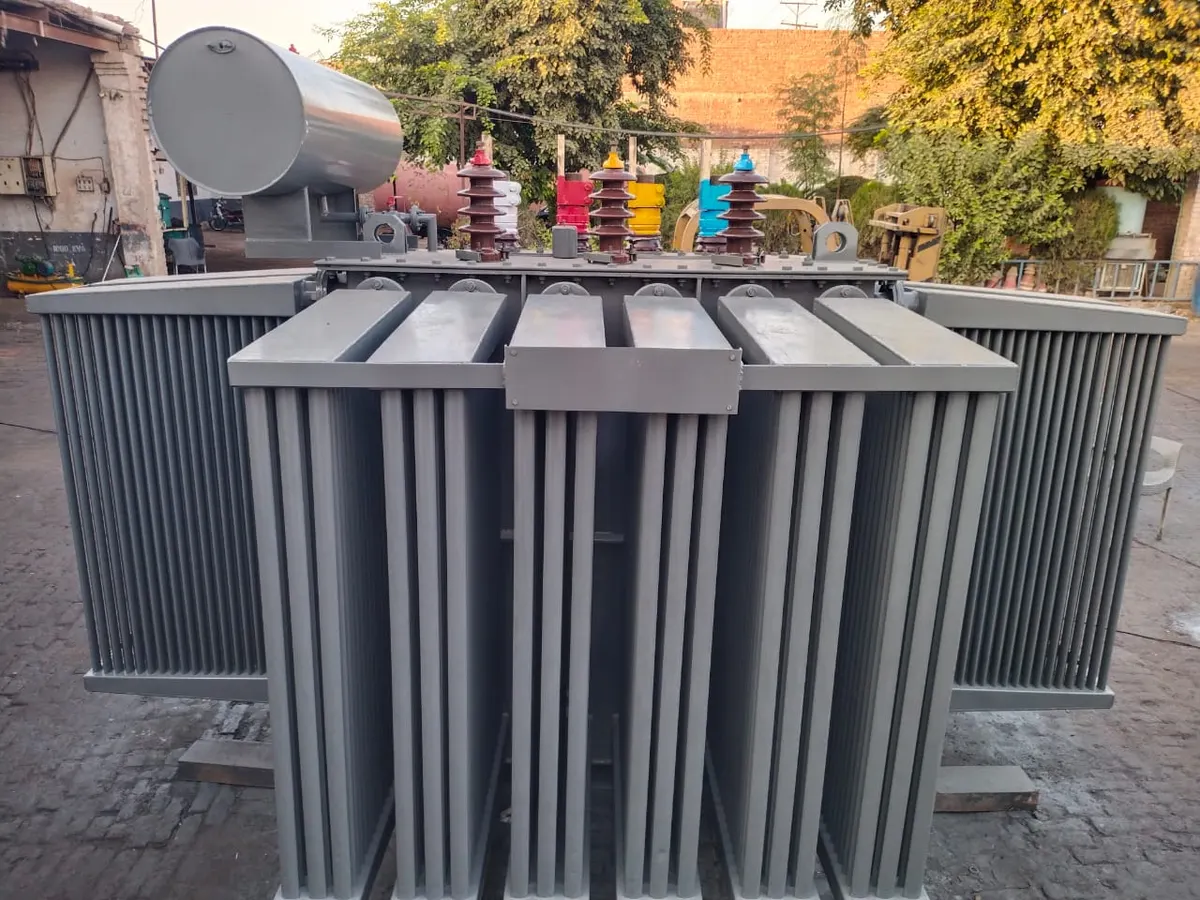
Over 50% of summer overheating calls attended by TransfoLine engineers in Lahore are resolved simply by restoring obstructed cooling airflow. In industrial areas, radiator fins accumulate heavy coatings of airborne cotton lint (textile mills), flour dust, chemical particulates, and dried monsoon mud.
A 2mm layer of industrial grime acts as a thermal insulation blanket, reducing radiator heat dissipation efficiency by up to 40%. Our on-site maintenance crews execute:
- Chemical Foam Descaling & Low-Pressure Washing: Radiator banks are soaked in non-corrosive surfactant foam to break down oily grime and gently washed with low-pressure water sprays (avoiding bending thin cooling fins).
- Substation Room Cross-Ventilation Upgrades: Indoor substations require adequate air exchanges. The inlet louver area must be at least 1.5x the radiator area, positioned near floor level, with heavy-duty exhaust fans installed at the highest wall point to expel rising hot air.
- Solar Heat Deflector Canopies: For outdoor transformers exposed to intense sun, we install elevated non-contact aluminium shade canopies that block solar UV radiation while maintaining unrestricted vertical airflow.
In high-throughput manufacturing environments like Sundar Industrial Estate, electrical loads are characterized by rapid duty-cycle shifts and continuous thermal dissipation. For instance, in automated blow-molding and pharmaceutical bottle-forming plants, hydraulic clamping motors and electric heating bands switch on and off cyclically hundreds of times per hour. This cyclic pulse-loading induces severe electromagnetic mechanical vibrations inside the transformer windings, causing micro-frictional wear against the interlayer paper insulation.
Furthermore, because many manufacturing units in Sundar operate dedicated 11kV rooftop solar grid-tied systems alongside LESCO utility supply, reverse power flow during midday low-production hours frequently drives local substation voltages upward. When utility line voltage surges coincide with peak solar generation, the transformer core operates near saturation, accelerating internal gas generation and thermal degradation.
Retrofitting Forced-Air (ONAF) Cooling Fans on Natural (ONAN) Units
If your factory's production demand cannot be curtailed during summer peaks to comply with thermal derating, TransfoLine can upgrade your existing Oil Natural Air Natural (ONAN) transformer to Oil Natural Air Forced (ONAF) cooling.
By retrofitting heavy-duty, IP55 weatherproof axial cooling fans directly beneath or alongside the radiator fin banks:
- Convective heat transfer from the radiator surfaces is accelerated by 250% to 300%.
- Top-oil temperature drops by 10°C to 15°C under identical electrical loading!
- The transformer gains a 15% to 25% continuous capacity boost without exceeding safe thermal winding hot-spot boundaries.
- Automatic thermostat controls trigger the cooling fans when top oil reaches 65°C and deactivate them when oil cools to 55°C, conserving auxiliary power during cooler night hours.
The Role of Oil Viscosity & Sludge in Thermal Choking
Transformer mineral oil is not merely an electrical insulator; it is the primary cooling fluid. As oil circulates through the vertical duct channels inside the winding coils, it absorbs heat and carries it to the outer radiators.
When oil is severely oxidized and aged:
- Viscosity increases, slowing down natural convective circulation speed.
- Heavy insoluble sludge settles into the lower winding ducts, creating "thermal choke points" where oil cannot flow. The copper windings in these choked channels experience runaway heating while the external thermometer on the tank shows deceptively normal temperatures!
- High moisture content in the oil evaporates into micro-bubbles at hot spots, drastically reducing the dielectric breakdown voltage and triggering catastrophic inter-turn arcs.
Executing high-vacuum oil dehydration and filtration before summer begins removes sludge, extracts moisture below 15 ppm, and restores optimal fluid viscosity for rapid cooling.
Essential 7-Point Summer Pre-Season Maintenance Checklist
Before May arrives in Lahore, factory electrical teams should execute this comprehensive pre-summer inspection:
- Clean All Radiator Fins: Remove all dust, lint, and mud using dry compressed air or specialized chemical foam wash.
- Inspect & Calibrate OTI/WTI Thermometers: Test temperature dials and trip micro-switches in a hot oil bath to verify accurate calibration (Alarm at 80°C, Trip at 90°C).
- Verify Conservator Oil Levels: Ensure oil level is at or above the 40°C mark on the sight gauge to allow proper expansion without overflowing or air entrapment.
- Recharge Silica Gel Breather: Discard saturated pink silica gel; bake or replace with active deep-blue gel and ensure the bottom oil sealing cup is clean and filled with fresh oil.
- Measure Dielectric Oil BDV: Draw a bottom oil sample; breakdown voltage must exceed 40 kV. If below 30 kV, execute high-vacuum filtration immediately.
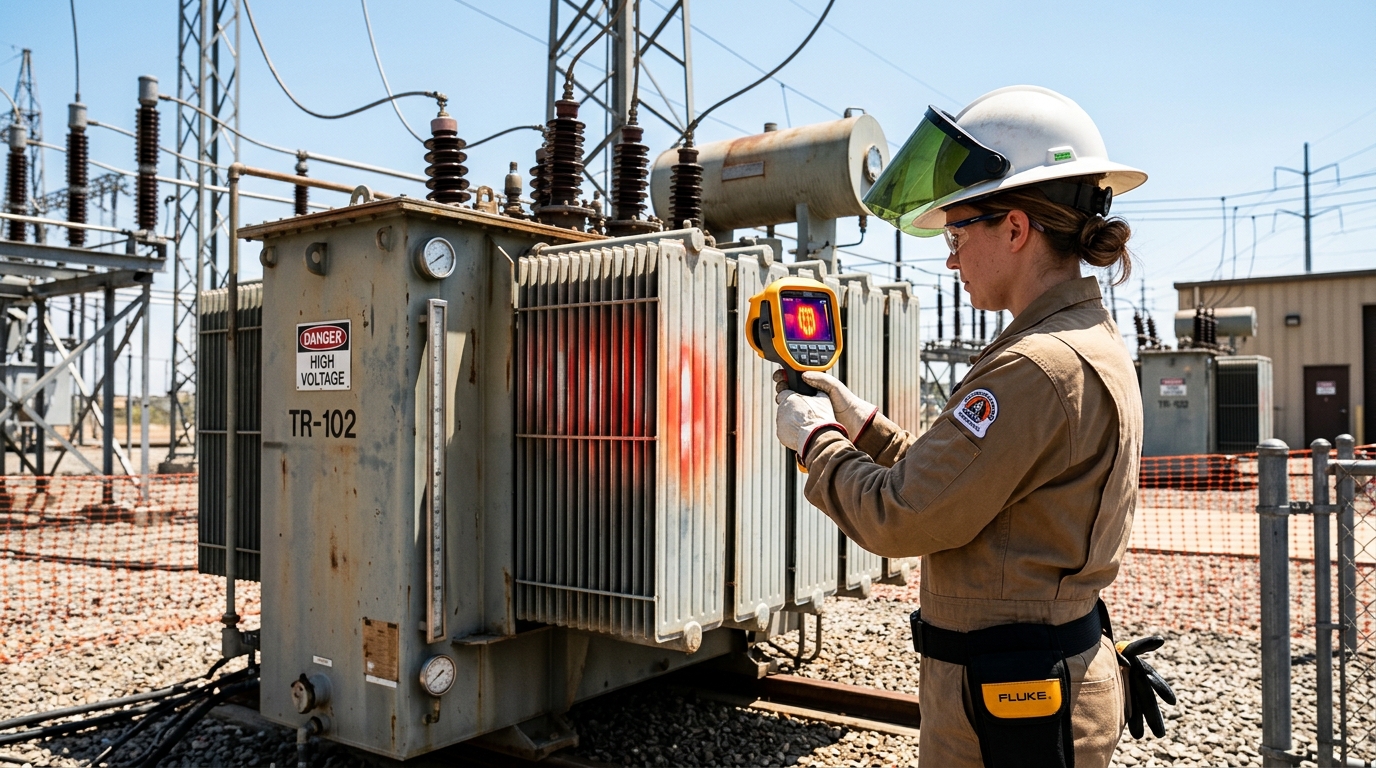
- FLIR Thermal Imaging Scan: Conduct an infrared scan under peak shift load to identify high-resistance hot spots on 11kV bushing stems and LT busbars.
- Check Neutral & Frame Earthing: Verify earth pit resistance is below 1.0 Ω to ensure stable voltage and prevent neutral heating.
Frequently Asked Questions
FAQ What is the maximum safe operating temperature for a transformer in Lahore summer?
For standard Class A insulated oil-immersed transformers, maximum continuous top-oil temperature should not exceed 85°C, and winding hot-spot temperature must remain below 98°C to 105°C. Any sustained operation above 95°C top oil will rapidly degrade insulation and trigger thermal protection trips.
FAQ Can we spray water hoses on the transformer radiators to cool it down?
No, spraying untreated tap or bore water onto an energized transformer is extremely dangerous. Minerals and dissolved salts in bore water leave hard lime scale on radiator fins, permanently destroying future heat dissipation. Furthermore, spraying water near 11kV bushings creates an immediate risk of lethal electrical flashover.
FAQ How much additional capacity does retrofitting cooling fans provide?
Retrofitting properly engineered IP55 forced-air cooling fans onto an ONAN radiator bank typically lowers oil temperature by 10°C to 15°C and increases safe continuous load capacity by 15% to 25% without exceeding thermal boundaries.
FAQ Why does our transformer trip on temperature when the factory is not at full load?
Tripping under partial electrical load is usually caused by blocked radiator fins, sludge deposits choking internal winding cooling ducts, high harmonic currents from VFDs generating high eddy losses, or unventilated substation rooms where ambient air exceeds 50°C.
FAQ How quickly can TransfoLine inspect an overheating transformer in Lahore?
Our mobile engineering van can arrive at your factory within 2 to 4 hours across all Lahore industrial zones (Sundar, Kot Lakhpat, Multan Road, Sheikhupura) equipped with FLIR infrared thermal cameras, oil BDV test sets, and temporary auxiliary cooling equipment.

TransfoLine Electrical Engineering Team
Specialized in industrial high-voltage substations, transformer rewinding, and power quality diagnostics across Pakistan. Based on Raiwind Road, Lahore with 18+ years of field experience and 10,000+ energized installations.
Urgent Transformer Breakdown in Lahore?
Our emergency mobile testing team arrives on-site in Sundar, Kot Lakhpat, Multan Road, or Sheikhupura within 2 to 4 hours. Standby loaner transformers available.